Smooth Transition to Secondary Rigor
We aspire to provide maximum opportunities to students to explore intellectual horizons, make conscious academic choices, and cultivate deep collaborative habits with their peers and mentors.
The backbone of our academic model is student-centered classrooms where learners take an active role in projects that provide them with hands-on, experiential discovery. The syllabus is meticulously structured to enable both students and teachers to know precisely what learning targets must be achieved.
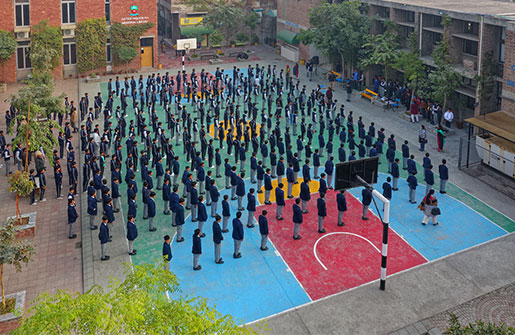 Engaging, collaborative classroom dynamics
The 4Cs of 21st-Century Learning
Connecting students to meet global future challenges by mastering the core four pillars of modern intelligence.
Communication
Articulating complex ideas clearly through persuasive speech, technical and creative writing, and respectful dialogue across diverse perspectives.
Collaboration
Working harmoniously in diverse teams, valuing group intelligence, leading project modules, and achieving shared academic goals.
Creativity
Approaching problems with curiosity, thinking outside conventional boundaries, designing original solutions, and appreciating artistic expression.
Critical Thinking
Analyzing empirical data, questioning assumptions, evaluating ethical implications, and constructing sound, evidence-based reasoning.